Unity
From Individual Lives to Collective Living

Unity is not an abstract ideal; it is lived—or lost—in daily routines. This domain addresses the shared infrastructures that quietly shape how people coexist: how food is prepared, waste is handled, objects are shared, movement is organised, and culture is lived.
These systems are not conveniences. They are social instruments. When designed well, they reduce duplication, ease inequality, and foster trust. When absent, fragmentation fills the gap.
Unity protects Auroville from drifting into private lifestyles that erode its collective spirit. At a time when scale, diversity, and pressure are increasing, shared systems are essential to keep the experiment intact—not by enforcing sameness, but by enabling cooperation.
Waste management in Auroville is a daily practice of responsibility, not an afterthought. It begins with reduction, segregation, reuse, and conscious consumption, long before disposal. The systems here aim to minimise landfill dependency and environmental harm while educating residents and visitors alike. Composting, recycling, and decentralised solutions reflect an understanding that waste is not merely a technical problem but a cultural one. How we discard reveals how we value materials, labour, and the Earth. This work demands patience and participation from everyone, not just specialists. When waste is handled consciously, it closes material loops and reinforces a deeper ethic: nothing is truly “away,” and every action has consequence.
The Library of Things challenges the habit of ownership by making shared access practical. Tools, appliances, and equipment that are rarely used individually become collectively available, reducing waste and unnecessary consumption. This system lowers costs, saves space, and encourages mindful use of resources. More importantly, it reshapes attitudes—from “mine” to “ours.” Borrowing requires trust, care, and accountability, reinforcing mutual responsibility. The library works best when users respect both the objects and the system that sustains them. In a city experimenting with new ways of living, such sharing infrastructures are essential. They make simplicity viable, without moral pressure—just practical sense.
Cycle kiosks support low-impact mobility by making bicycles accessible, repairable, and central to daily movement. In Auroville, cycling is not only transport; it is a way of staying connected to the land and each other. Kiosks offer maintenance, tools, and guidance, encouraging self-reliance while reducing dependence on motorised vehicles. They help keep movement quiet, affordable, and environmentally light. The presence of cycle kiosks also signals a choice: to prioritise health, simplicity, and shared space over speed. When cycling is supported collectively, it becomes easier for residents and visitors alike to adopt habits aligned with Auroville’s ecological and human-scale intentions.
Collective laundrettes reduce water, energy, and infrastructure duplication while easing the domestic burden on individuals. By pooling resources, they make efficient systems viable—machines maintained properly, water use monitored, and processes improved over time. These spaces also quietly reshape habits: fewer loads, shared schedules, and greater awareness of consumption. Like other shared services, laundrettes work only when users act responsibly and respect common property. Their value lies not just in efficiency, but in normalising cooperation in ordinary tasks. Clean clothes are a necessity; how we manage them can either reinforce isolation or strengthen collective life. The laundrette chooses the latter, through simple, shared means.
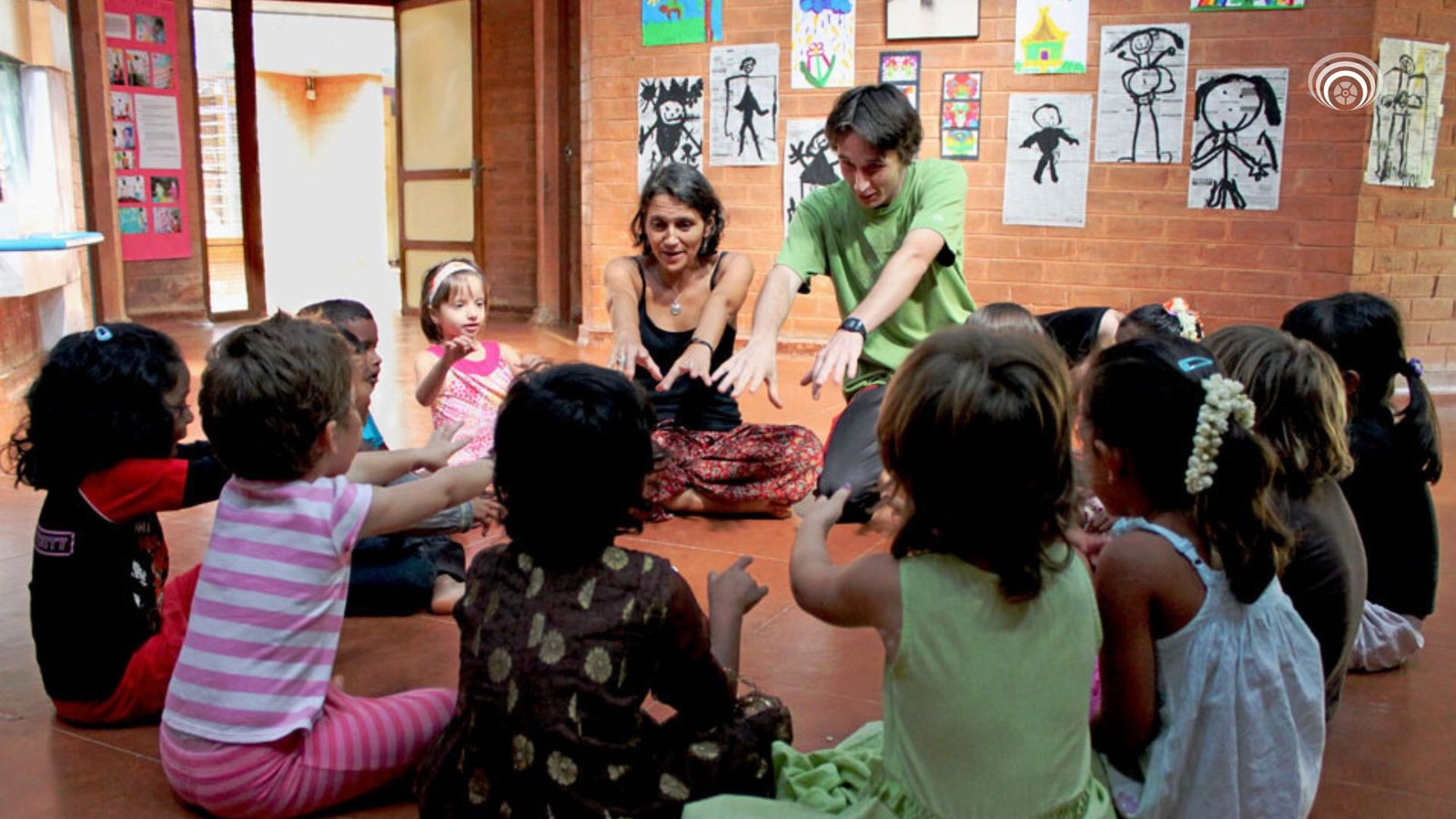
Art and culture in Auroville are not decorative; they are integrative. Through music, visual arts, performance, and shared cultural events, differences find expression without turning into division. These spaces allow emotion, questioning, and aspiration to surface in forms beyond debate or policy. Peace is cultivated not by uniformity, but by creating room for diverse voices to coexist meaningfully. Cultural practices help communities process tension, celebrate life, and remember common ground. They also connect inner experience with collective expression. In a place dedicated to human unity, art becomes a quiet bridge—holding complexity, inviting reflection, and keeping the deeper aim present in daily life.
Human unity becomes tangible when daily life shifts from possession to participation. These systems allow unity to be practised quietly, repeatedly, and without ideology.
AWARE’s Welfare reflects on how Auroville supports those who choose a life of service—through education, wellbeing, livelihoods, culture, and collective systems—so that human potential is sustained, not exhausted. These learnings emerge from lived experience and evolving practice, and may be of value to others exploring humane, purpose-driven ways of living together.
Share the work with those interested in how collective cares for those serving a larger aim.