Green Zone
The living ecosystem that sustains the City

The Green zone is Auroville’s ecological backbone. It encircles the city not as a buffer zone, but as a living system—one that regenerates land, restores water, nurtures biodiversity, and supports collective sustenance. Conceived from the beginning as integral to the city’s survival, the Green zone ensures that urban life does not grow at the expense of the Earth.
This domain exists to heal what was once degraded land and to demonstrate how human settlement can actively repair ecological damage. Forests, farms, watersheds, and pathways are woven together to create resilience—material, environmental, and social. The Green zone protects the city from unchecked sprawl while feeding it, cooling it, and grounding it.
At a moment of planetary ecological crisis, the Green zone matters not only to Auroville, but as a living example of how cities can coexist with nature—not by retreating from it, but by consciously stewarding it.
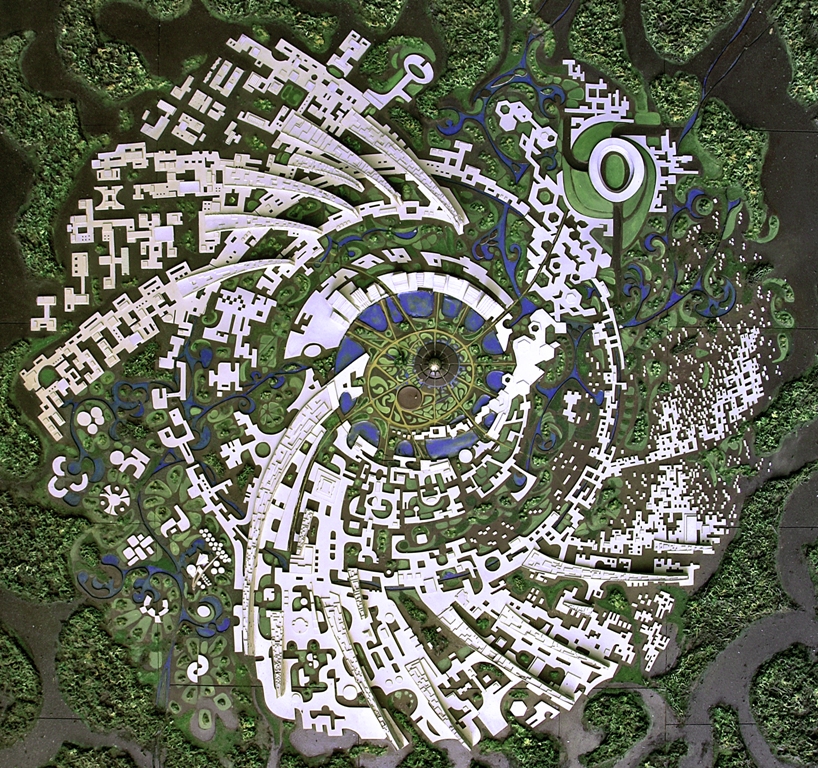
The Four Parks form the living ecological and symbolic spine of the Green Belt, each reflecting a different aspect of force, harmony, abundance, and skill. They are not ornamental landscapes but functional green systems—supporting biodiversity, water retention, soil health, and quiet human presence. These parks offer space for walking, reflection, and contact with nature, while also anchoring larger ecological processes around the city. Their preparation requires long-term stewardship rather than quick development: careful planting, protection from encroachment, and respect for natural rhythms. Together, they hold the Green Belt as a living field where spiritual symbolism and ecological responsibility meet in practical, visible form.
Farms in Auroville are central to both sustenance and healing the land. What was once degraded terrain has been steadily restored through organic farming, mixed cropping, and patient soil work. These farms aim not only to feed the community, but to rebuild fertility, retain water, and reduce dependence on external supply chains. Farming here is experimental and adaptive, integrating traditional knowledge with ecological science. Preparing this domain means securing land, water access, and long-term continuity for farmers, while strengthening links between production and consumption within the city. The farm is both workplace and teacher—reminding the city that nourishment begins in living soil.
Afforestation and watershed work underpin Auroville’s ecological resilience. Tree planting, contour bunding, check dams, and water-harvesting structures have gradually transformed an eroded plateau into a functioning landscape that absorbs rain rather than losing it. Forest cover moderates temperature, supports biodiversity, and stabilises soil, while watersheds ensure groundwater recharge and long-term water security. This work is slow, cumulative, and easily undone if neglected. Preparing these systems means protecting them from fragmentation, ensuring maintenance, and integrating new development with hydrological realities. They are invisible infrastructures—rarely noticed when functioning well, but fundamental to the city’s survival and ecological integrity.
Eco-restoration corridors link forests, farms, and water bodies into continuous habitats that allow life to move and regenerate. These corridors are essential for birds, insects, animals, and plant diversity, preventing isolated green patches from becoming ecological islands. They also offer quiet movement paths for people, reinforcing a relationship with living systems rather than built environments alone. Preparing these corridors requires restraint—resisting roads, fences, and short-term use that breaks continuity. It involves patient planting, protection, and long-term vision. These corridors are not decorative buffers; they are living arteries that keep the Green Belt ecologically coherent and alive.
Service nodes provide the practical backbone that allows the Green Belt to function without disturbance. They host essential infrastructure for maintenance teams, equipment storage, water management, and controlled access. Placed carefully, these nodes reduce ad-hoc interventions and protect sensitive areas from unnecessary traffic. Their design must be modest, durable, and integrated with the landscape. Preparing service nodes is about enabling care without intrusion—making sure ecological work can continue efficiently while preserving the larger integrity of the Green Belt. When done well, these nodes remain almost invisible, yet they quietly sustain the daily work that keeps the land healthy.
The cycle path network weaves through the Green Belt as a low-impact alternative to motorised movement. It allows people to move across the city and its edges while staying connected to land, trees, and open space. These paths support daily commuting, quiet travel, and recreational movement without noise or emissions. Preparing the network means continuity, safety, and maintenance—paths that are usable year-round, shaded where possible, and respectful of ecological flows. More than infrastructure, the cycle network shapes habit and culture, reinforcing a way of moving that is slower, attentive, and aligned with the spirit of the place.
The Green Zone anchors Auroville’s inner aspiration in the material reality of the Earth. It reminds the city that spiritual and social progress cannot be separated from ecological responsibility. By regenerating land and water, it safeguards the conditions for long-term collective life—ensuring that the city grows not by consuming its environment, but by caring for it consciously.
Prepare the City the Earth needs, with Aware. Reflect on how the City takes form—its spaces, systems, and intentions—so that Auroville can consciously shape its future and share these learnings with others engaged in collective progress.
Share the work with those interested in how cities of purpose are prepared.