City Centre
The psychic heart of Auroville’s unfolding

The City Centre exists to hold the deepest intention of Auroville. Conceived as a space of concentration rather than activity, it anchors the city inwardly even as the city grows outwardly. Centred on the Matrimandir, this zone is not meant for commerce, residence, or spectacle, but for silence, alignment, and collective aspiration.
Preparing the City Centre is therefore not a technical task alone. It is the work of safeguarding conditions—physical, spatial, and psychological—that allow a higher consciousness to act at the core of collective life. Paths, gardens, water bodies, and support structures are shaped to serve inner work, not distract from it.
At a time when pressures of growth, visibility, and demand intensify, the City Centre matters more than ever. It reminds the city why it exists. It ensures that expansion does not eclipse essence, and that Auroville remains oriented to its true centre—within.
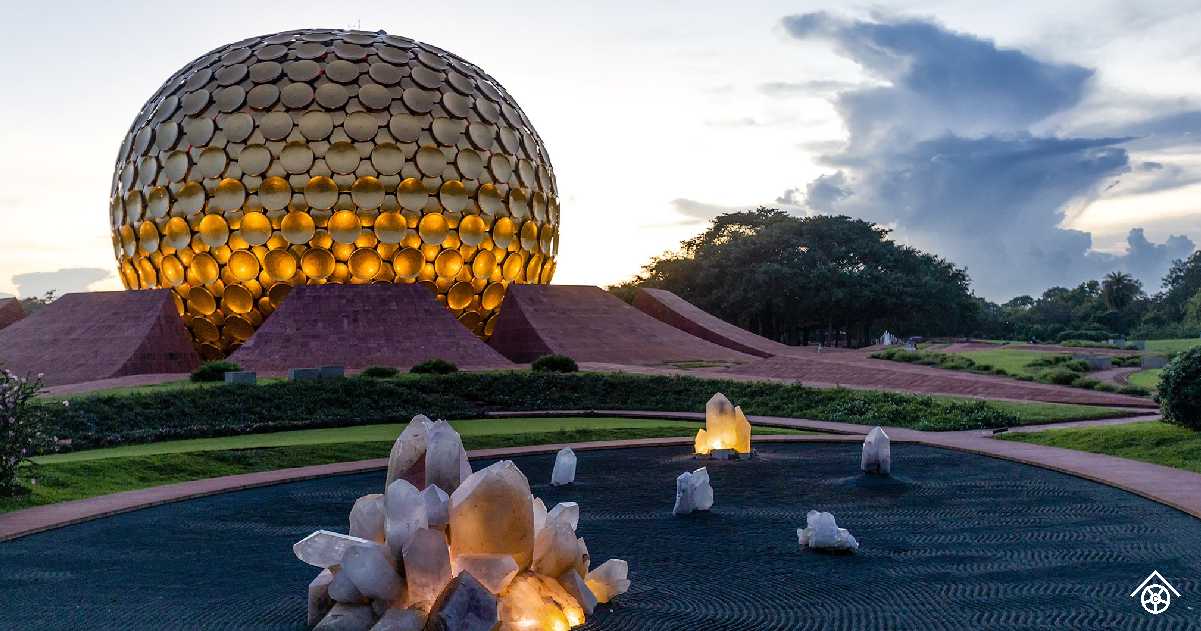
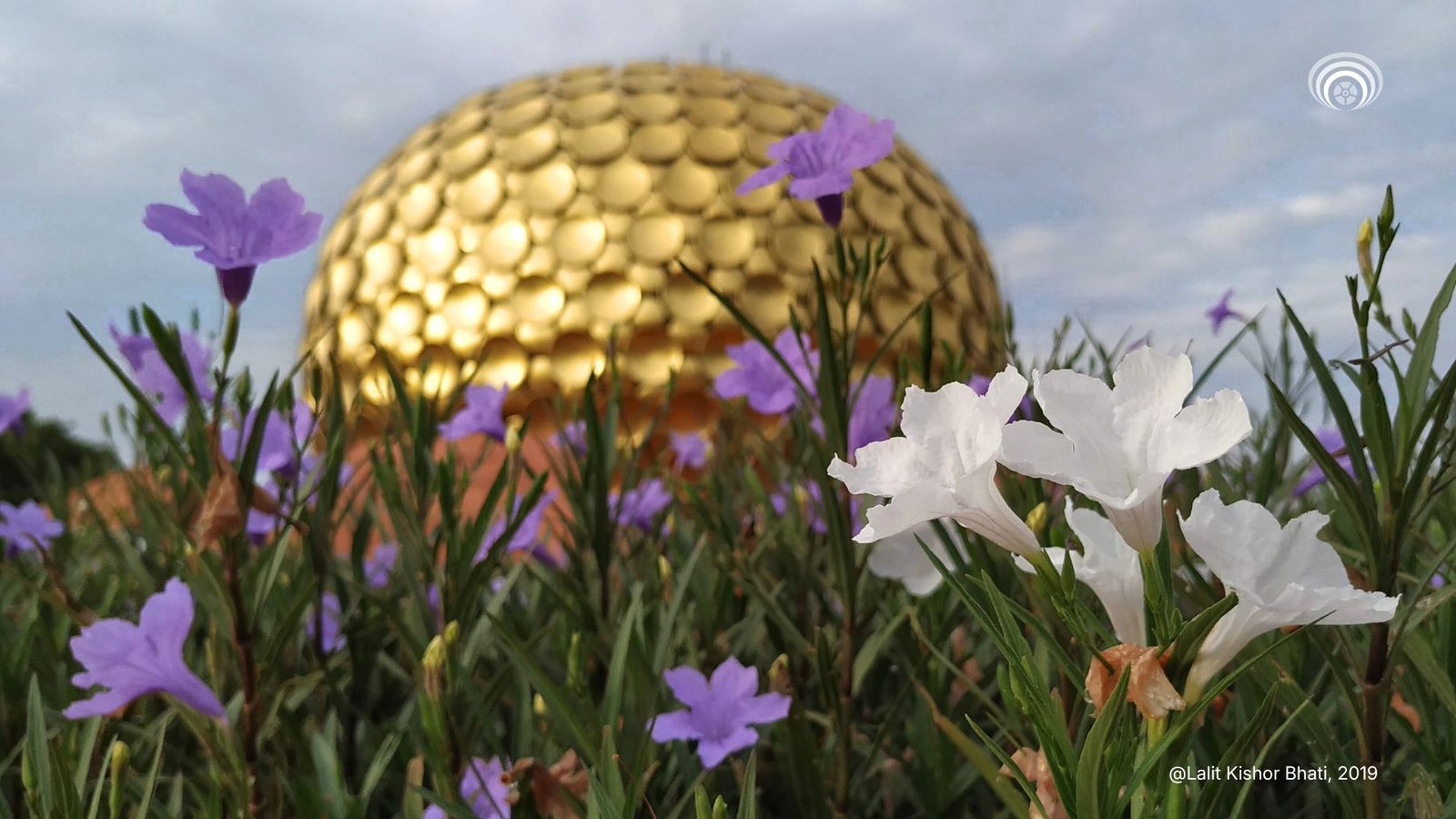
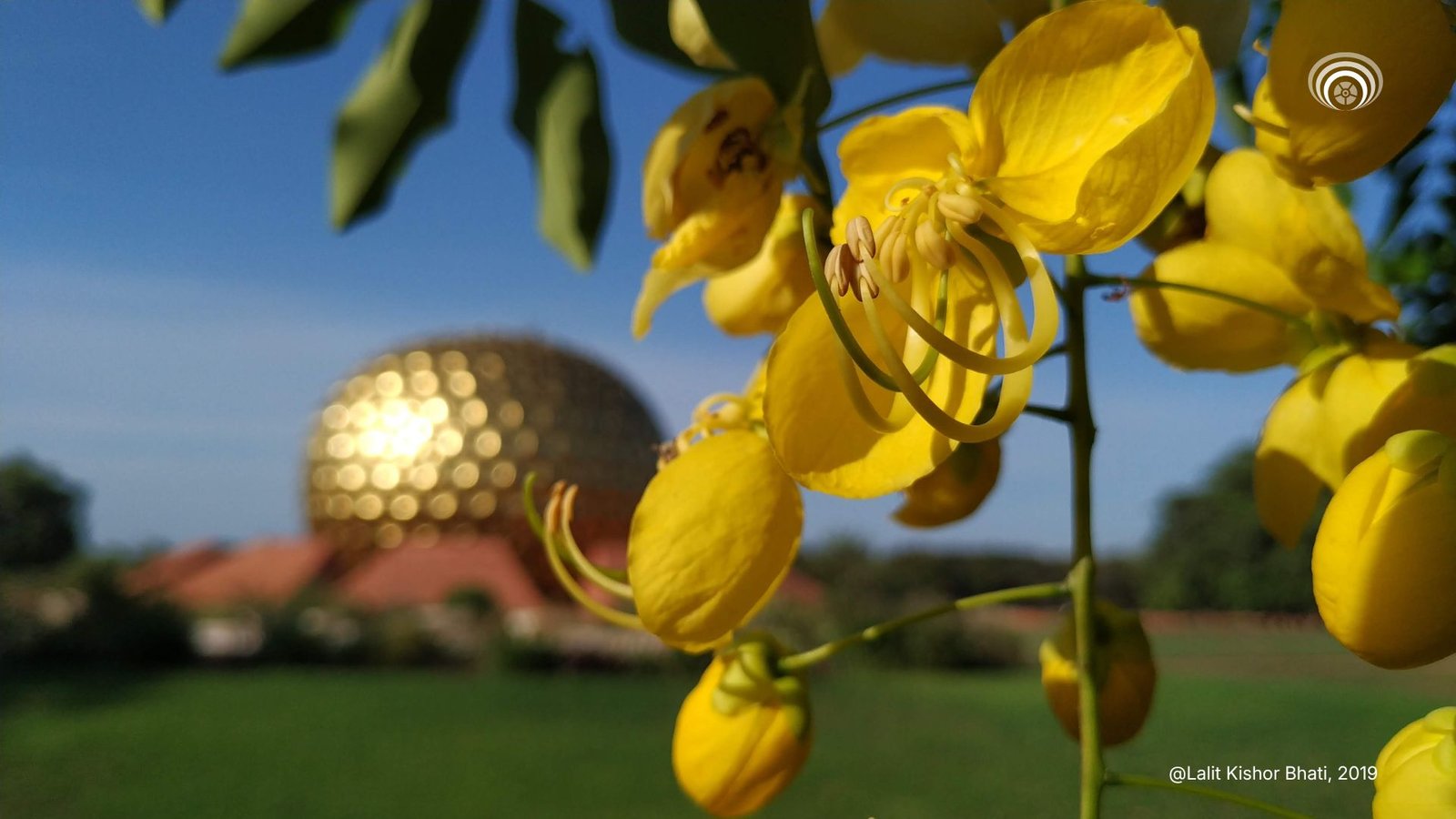
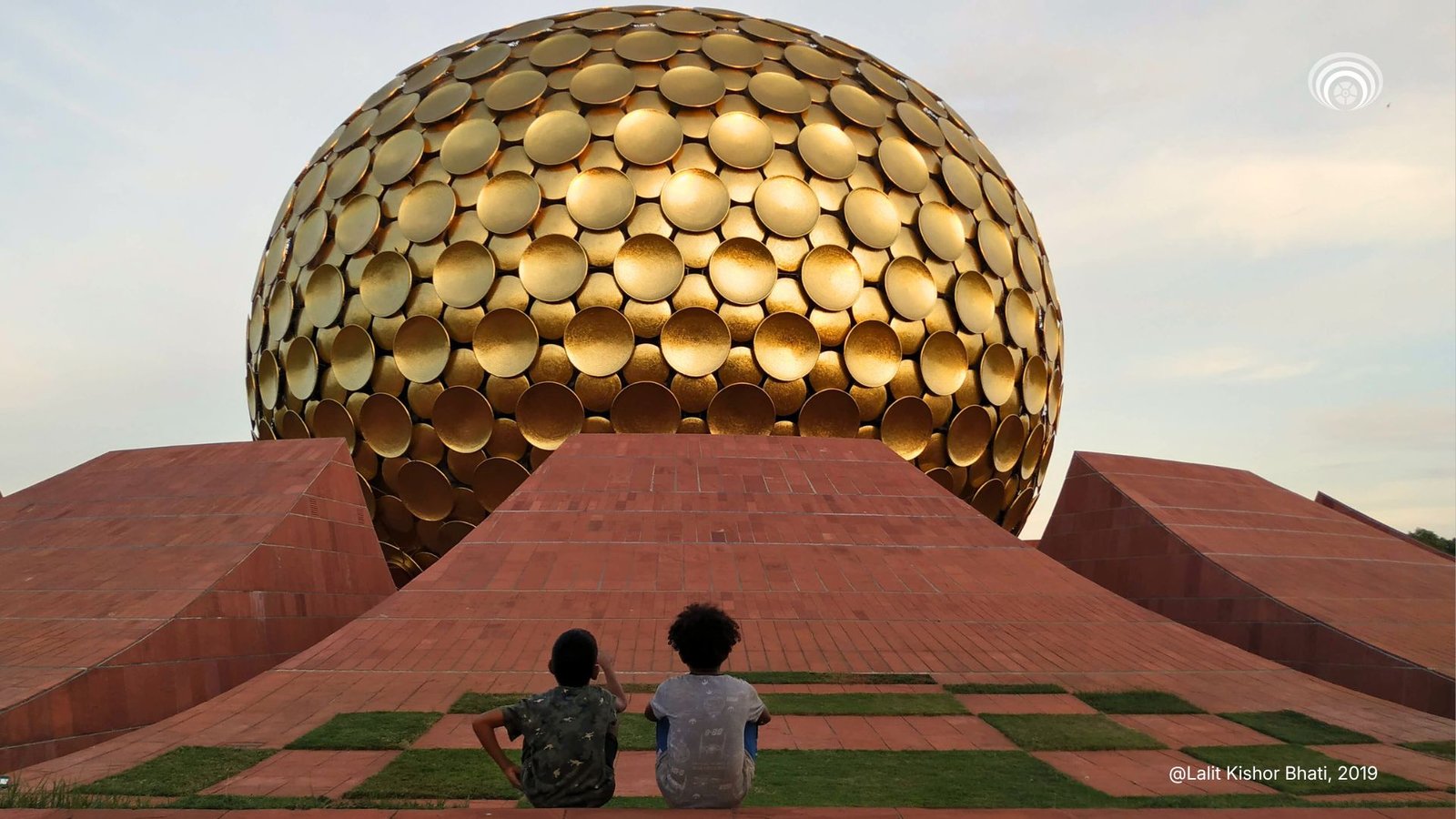
The Matrimandir stands at the centre of Auroville, not as a monument, but as a place for concentration. It was conceived as a space where one can sit quietly, turn inward, and touch a deeper stillness. The experience here is not about belief or ritual, but about presence. Over the years, it has become a point of reference for the city—reminding us why Auroville exists at all. Everything else radiates outward from this centre. Its protection is essential, not only physically, but atmospherically. The Matrimandir holds the city’s aspiration when words, plans, and debates fall silent.
The Twelve Gardens are not decorative parks; they are living fields meant to express different qualities of consciousness through form, vegetation, and space. Each garden is approached slowly, with care, and developed over time rather than finished quickly. They invite reflection, walking, and quiet observation. Their value lies as much in the process of creation as in the experience they offer. Together, they form a bridge between inner states and the outer environment, showing how consciousness can be approached through landscape without imposing interpretation or instruction.
The Matrimandir Lake serves both a practical and symbolic function. It collects rainwater, supports groundwater recharge, and contributes to the ecological balance of the area. At the same time, its still surface reflects the Matrimandir, creating a space of calm and visual clarity. The lake reminds us that ecological responsibility and inner work are not separate concerns. Its maintenance requires attention, restraint, and long-term thinking—qualities that Auroville continues to learn. The lake is a quiet example of how infrastructure can support both sustainability and contemplation.
The Park of Unity is intended as an open space where people from many backgrounds can gather without agenda. It is not programmed for constant activity, nor is it fenced by function. Instead, it offers a shared ground—physically and symbolically—where the idea of unity can be lived in simple ways: walking, meeting, resting, or celebrating together. Its success depends less on design than on how it is held and used over time. The park reflects Auroville’s ongoing effort to create spaces that belong to everyone without becoming owned by anyone.
The Reception Complex is often the first point of contact for visitors approaching the Matrimandir area. Its role is practical: orientation, information, access management. But it also carries a deeper responsibility—to help visitors approach the centre with understanding and respect. This space mediates between curiosity and silence, between arrival and inner readiness. How it functions affects the atmosphere of the entire Peace Area. When handled well, it supports a transition from outward movement to inward attention, allowing visitors to meet the Matrimandir without haste or distraction.
The Town Hall is conceived as a place where collective matters can be addressed in proximity to the city’s centre, without disturbing it. It represents the civic life of Auroville—meetings, dialogue, decision-making—held in alignment with the deeper purpose of the city. Its location near the Peace Area is not accidental; it reminds us that governance and administration must remain connected to aspiration. The Town Hall is not meant to dominate the centre, but to serve the collective responsibly, with transparency and restraint.
CIRHU exists to support thoughtful research, documentation, and reflection related to Auroville’s development and experience. Its work is not detached analysis, but inquiry rooted in lived reality. By studying social processes, governance, education, and collective dynamics, CIRHU helps the city understand itself more clearly. This kind of research supports coherence—allowing learning to accumulate rather than repeat. CIRHU plays a quiet but important role in helping Auroville pause, reflect, and adjust, so that growth remains conscious rather than reactive.
The City Centre ensures that Auroville’s outer systems remain guided by inner aspiration. It is where silence informs structure, where intention precedes action. By protecting this still point, the city preserves its capacity to evolve consciously—allowing governance, culture, economy, and daily life to remain aligned with the deeper purpose that called Auroville into being.
Prepare the City the Earth needs, with Aware. Reflect on how the City takes form—its spaces, systems, and intentions—so that Auroville can consciously shape its future and share these learnings with others engaged in collective progress.
Share the work with those interested in how cities of purpose are prepared.